
Summary:
- Comparing smart charge points vs dumb chargers reveals a major gap in financial savings, safety features, and long-term convenience for UK electric vehicle owners.
- Under the UK’s Electric Vehicles (Smart Charge Points) Regulations, all new domestic wallboxes sold in Great Britain must feature smart connectivity, off-peak default scheduling, and randomized delay functions.
- While a basic “dumb” charger simply supplies power, a smart charge point automatically syncs with off-peak electricity tariffs to slash charging costs down to ~2p per mile.
- Spending extra on a smart charger pays for itself within months through dynamic tariff scheduling, solar integration, and remote smartphone monitoring.
Hi, I’m Josevi. Deciding between smart charge points vs dumb chargers is one of the most critical choices every new electric vehicle owner in the UK faces when setting up home charging. When you buy your first electric car, the upfront cost of installing a home wallbox can feel steep. It is completely tempting to look at basic, unsmart chargers or industrial sockets and wonder why anyone would spend £800 to £1,200 on a high-tech smart unit when a “dumb” charger delivers electricity to the battery just the same.
However, home EV charging in 2026 is about far more than just transferring kilowatts into a battery. The UK energy grid, smart tariffs, and statutory safety standards have evolved drastically. In this comprehensive guide, I will break down the fundamental differences between smart and unsmart units, explain current UK smart charge point regulations, and demonstrate why investing in a smart wallbox is unquestionably worth the extra money.
What is the Difference Between Smart and Dumb EV Chargers?
Before examining the financial return on investment, we need to clarify what these two terms actually mean in everyday practice.
- Dumb Chargers (Unsmart Chargers): A dumb charger is a basic plug-and-play device. It has no Wi-Fi, no Bluetooth, no smartphone app, and no data connection. The moment you plug the cable into your car, the charger delivers power at its maximum capacity (usually 7kW) until the car is full or unplugged. It cannot track energy usage, cannot distinguish between cheap and expensive electricity hours, and cannot receive remote software updates.
- Smart Charge Points: A smart charger connects to your home Wi-Fi or a built-in 4G SIM card. It communicates directly with smartphone apps, your vehicle’s software, and your energy supplier. It allows you to schedule charging during cheap overnight windows, track real-time energy costs, integrate with solar panels, and adjust power output dynamically to prevent blowing your main household fuse.
The UK Legal Context: Smart Charge Points Regulations
If you are buying a brand-new home wallbox in Great Britain, the debate between smart charge points vs dumb chargers is partly decided by UK law.
In June 2022, the UK government enacted the statutory GOV.UK Electric Vehicle Smart Charge Points Regulations. This legislation mandates that all private (domestic and workplace) EV chargepoints sold in England, Scotland, and Wales must incorporate smart functionality.
Under these regulations, compliant smart wallboxes must include:
- Smart Functionality: The ability to send and receive data via a communications network.
- Default Off-Peak Charging: Pre-set settings that automatically encourage charging outside peak demand hours (avoiding 4:00 pm to 10:00 pm).
- Randomized Delay: A safety feature that delays charging start times by up to 10 minutes to prevent sudden surges on the local electrical grid when off-peak hours begin.
- Cyber Security & Data Privacy: Encryption standards to protect your home Wi-Fi network and personal data from cyber threats.
While older unsmart chargers are still legal to use if already installed, buying a new unsmart wallbox from reputable UK retailers is largely a thing of the past.
Smart Charge Points vs Dumb Chargers: Key Differences
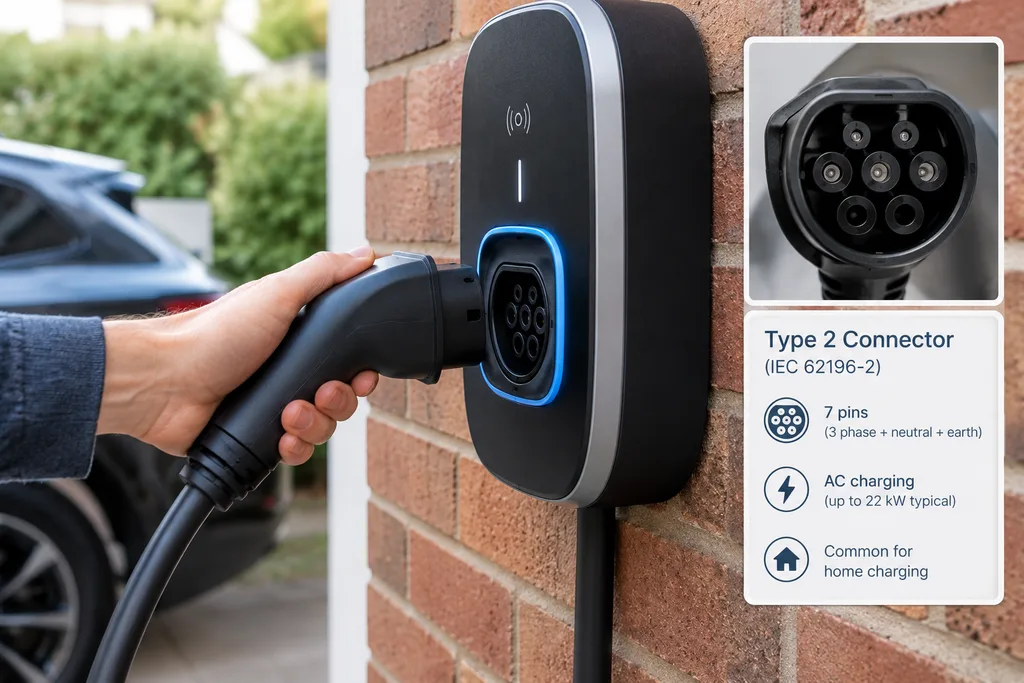
To see whether a smart unit is worth the higher initial price tag, let’s compare the core operational capabilities side-by-side:
| Feature | Smart Charge Point | Dumb / Basic Charger |
| Tariff Automation | Fully automated off-peak scheduling | Manual plug-in or car timer only |
| Average Cost per Mile | ~2p – 3p (via EV Tariffs) | ~7.5p (Standard Price Cap) |
| Load Balancing | Dynamic protection against main fuse trip | Fixed output (Risk of overload) |
| Solar Panel Integration | Excess solar diversion supported | Not possible |
| Energy Tracking & Insights | Detailed app history (kWh and £) | None |
| Government Grant Support | Eligible for OZEV grants | Ineligible |
1. Tariff Integration and Financial Savings
The single biggest reason why smart charge points win the smart charge points vs dumb chargers comparison is running costs.
Electricity in the UK is expensive during the day (around 26p–28p per kWh under the standard price cap). However, energy suppliers offer specialized time-of-use tariffs that lower overnight rates to 6.5p–9p per kWh. To understand how these night rates work, read our complete guide on the best time to charge an EV in the UK.
A dumb charger cannot communicate with your energy supplier. If you plug it in at 5:30 pm after work, it immediately begins charging at 27p per kWh, costing you roughly £13.50 for a 50kWh top-up.
In contrast, a smart wallbox communicates with smart tariffs like Intelligent Octopus or OVO Charge Anytime. You plug the car in at 5:30 pm, but the smart charger holds off drawing power until midnight when rates drop to 7p per kWh. That exact same 50kWh charge now costs just £3.50.
Over 10,000 miles of annual driving, a smart charger saves you over £500 per year in electricity bills. If a smart wallbox costs £300 more upfront than a basic unsmart setup, it pays for itself in less than eight months. To compare off-peak rates, check out our analysis of Economy 7 vs Smart EV Tariffs.
2. Safety, Dynamic Load Management, and Earthing
Safety engineering is another area where smart charge points drastically outperform unsmart units.
A standard UK home typically has a main electrical fuse rated at 60, 80, or 100 amps. A 7kW wallbox draws roughly 32 amps on its own. If your oven, heat pump, tumble dryer, and shower are running simultaneously while a dumb charger draws 32 amps, you risk blowing your main service fuse, leaving your entire house in the dark.
Smart chargers feature Dynamic Load Management (DLM). Using a small current sensor (CT clamp) attached to your main electricity meter, the smart charger monitors your house’s real-time consumption. If your household appliances draw heavy power, the smart charger automatically dials back its output (e.g., from 32A down to 16A) and ramps back up once the oven turns off.
Furthermore, modern smart chargers incorporate built-in protection mechanisms. When evaluating hardware, check whether your installer needs to dig up your driveway by reading our guide on does an EV charger need an earth rod.
3. Solar Diversion and Future-Proofing
If you have rooftop solar panels (or plan to install them in the future), a smart charge point is essential.
Smart chargers like the Myenergi Zappi or Hypervolt 3 Pro feature dedicated solar diversion modes. They monitor how much excess solar power your roof is producing. If your panels generate 3.5kW of excess solar energy that would otherwise be exported to the grid for pennies, the smart charger diverts that exact 3.5kW straight into your car’s battery for 100% free driving. A dumb charger cannot perform solar diversion.
If you are renting your home or living in a flat, you can also lower your upfront costs significantly. Tenants can apply for government subsidies by checking our guide to the OZEV grant for renters.
If you park on the street and run cables over public paths, make sure you comply with local bylaws and use the best EV cable protectors for pavement charging to eliminate trip hazards.
Frequently Asked Questions (FAQs)
Can I still charge my car if my Wi-Fi goes down on a smart charger? Yes. All smart charge points have a “fail-safe” plug-and-charge mode. If your home Internet connection drops, the charger operates like a standard unit, delivering power safely to your car.
Are dumb chargers completely illegal in the UK? No, existing dumb chargers installed prior to June 2022 remain perfectly legal to use. However, UK regulations prohibit approved commercial retailers from selling new non-smart domestic wallboxes that lack smart compliance features.
Is it worth replacing an existing dumb charger with a smart charge point? If you drive more than 5,000 miles per year, upgrading from an old dumb charger to a modern smart charger is almost always financially worth it. The ability to access 7p/kWh off-peak smart EV tariffs will quickly offset the replacement installation cost.
The Bottom Line
When comparing smart charge points vs dumb chargers, spending the extra upfront cost on a smart unit is undeniably worth it in 2026. While a dumb charger may seem cheaper initially, it locks you into expensive daytime electricity rates, lacks dynamic fuse protection, and misses out on solar integration.
By investing in a compliant smart charge point, you unlock cheap overnight tariffs that lower your driving costs to roughly 2p per mile, protect your home’s electrical system, and ensure your home setup remains fully future-proofed for years to come.