
Summary:
- The debate over Economy 7 vs Smart EV Tariffs is critical for any driver, but modern tariffs designed specifically for electric vehicles offer significantly lower overnight prices, often around 6.66p/kWh.
- A classic Economy 7 tariff drastically increases your daytime electricity costs, meaning it is only financially viable if you can shift at least 30% to 40% of your total household usage into the early hours of the morning.
- Older two-rate meters do not automatically adjust for British Summer Time (BST), which can lead to accidental peak-rate billing if you charge your car at the wrong time.
- For the vast majority of UK homes in 2026, switching to a dedicated, programmable EV tariff with a SMETS2 smart meter is exponentially safer and cheaper than maintaining a traditional two-rate plan.
Hi, I’m Josevi. Throughout my time auditing home network setups and charging infrastructure, the most common question I receive from new electric vehicle drivers is how to keep their energy bills under control. When you buy an EV, your domestic electricity consumption inevitably skyrockets. Many people living in older properties simply assume that their existing day/night electricity plan is the best way forward. However, when you closely analyse Economy 7 vs Smart EV Tariffs, the numbers tell a very different and surprising story.
In this comprehensive guide, we are going to break down the true cost per kilowatt, expose the hidden risks of daytime peak rates, and discover which option is genuinely the cheapest for charging your vehicle at home without getting a nasty shock at the end of the month.
Understanding the Classic Economy 7 System
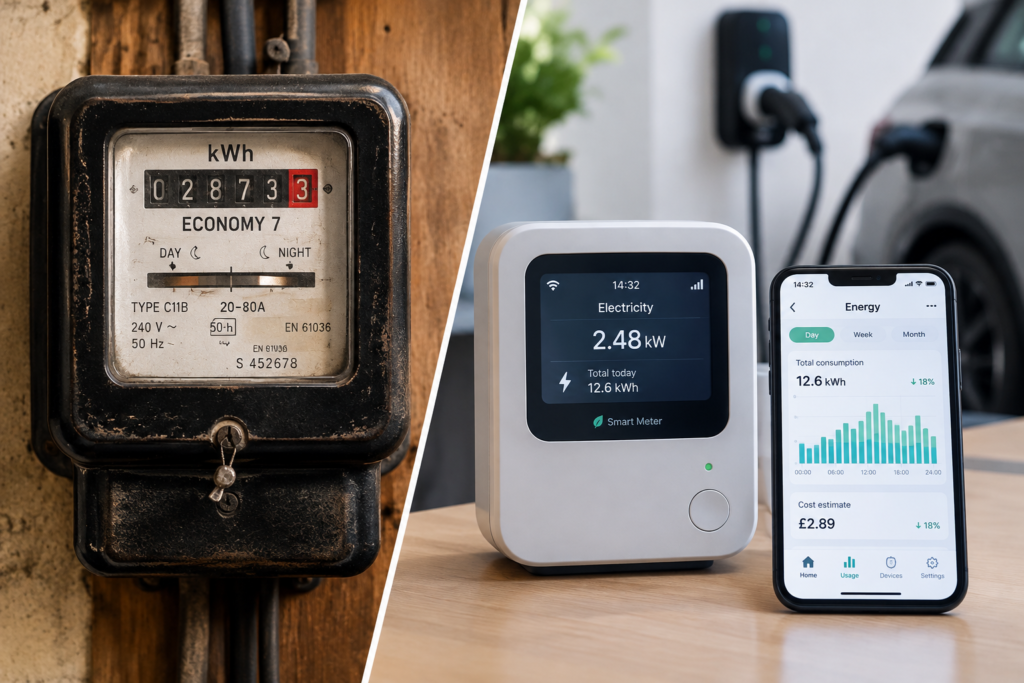
To understand why the UK energy market is shifting rapidly, we first need to understand the older technology. An Economy 7 tariff measures your electricity usage based on two different prices: a daytime (peak) rate and a nighttime (off-peak) rate.
The number “7” stems from the fact that the cheaper rate applies for exactly seven hours during the night. Usually, this low-price window occurs between midnight and 7:00 am. During the other 17 hours of the day, your electricity costs can be significantly more expensive than a standard single-rate tariff.
The mathematics for your household are crucial here: an Economy 7 tariff will typically only save you money if you manage to consume at least 30% of your total electricity during those off-peak hours. Originally, this system was designed in the 1970s to benefit homes with night storage heaters, not to power a modern vehicle carrying a massive 60kWh lithium-ion battery.
The Hidden Danger of the Economy 7 Meter Off Peak Times
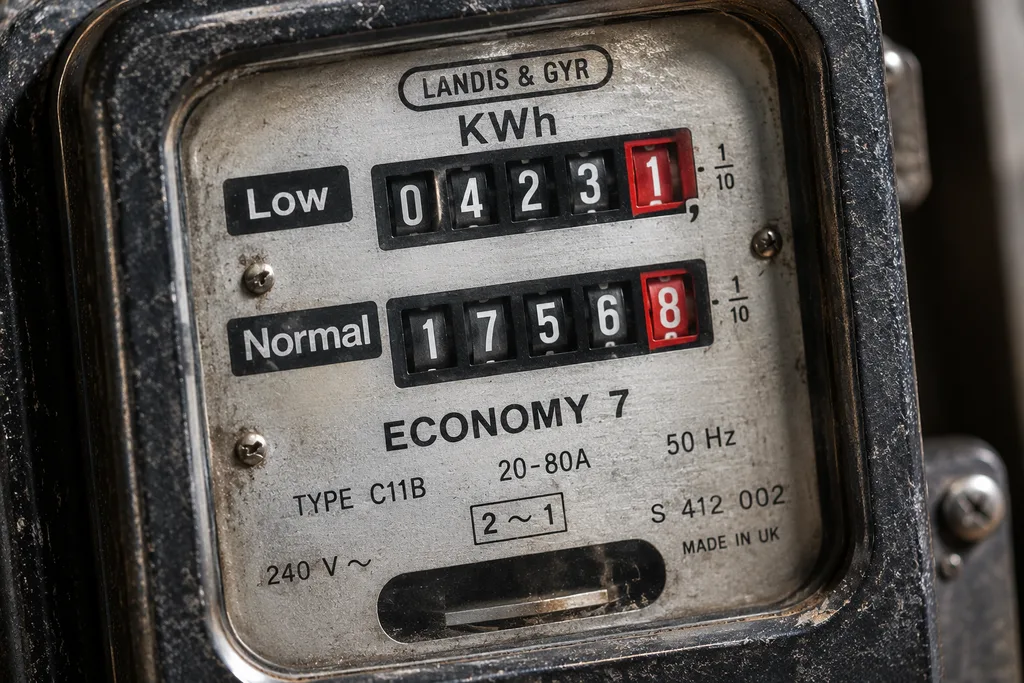
If you live in a property with a classic analogue two-rate meter, there is a hidden danger you must be aware of: most of these old meters do not automatically adjust when the clocks go forward or backward for daylight saving time.
If you do not manually adjust your charging schedule, your car might pull maximum power outside of your Economy 7 meter off peak window, resulting in you paying the punishing peak rate. In contrast, modern smart meters track time via Coordinated Universal Time (UTC), ensuring your cheap charging window is always accurately billed, even during British Summer Time (BST).
The Evolution: What Are Dedicated Smart EV Tariffs?
Unlike the rigid two-rate system of the past, an EV tariff is a modern time-of-use energy plan designed specifically for homes that plug in a vehicle. These exclusive tariffs offer a significantly lower unit rate during specific off-peak hours, achieving the most optimized smart EV charging cost available on the market today.
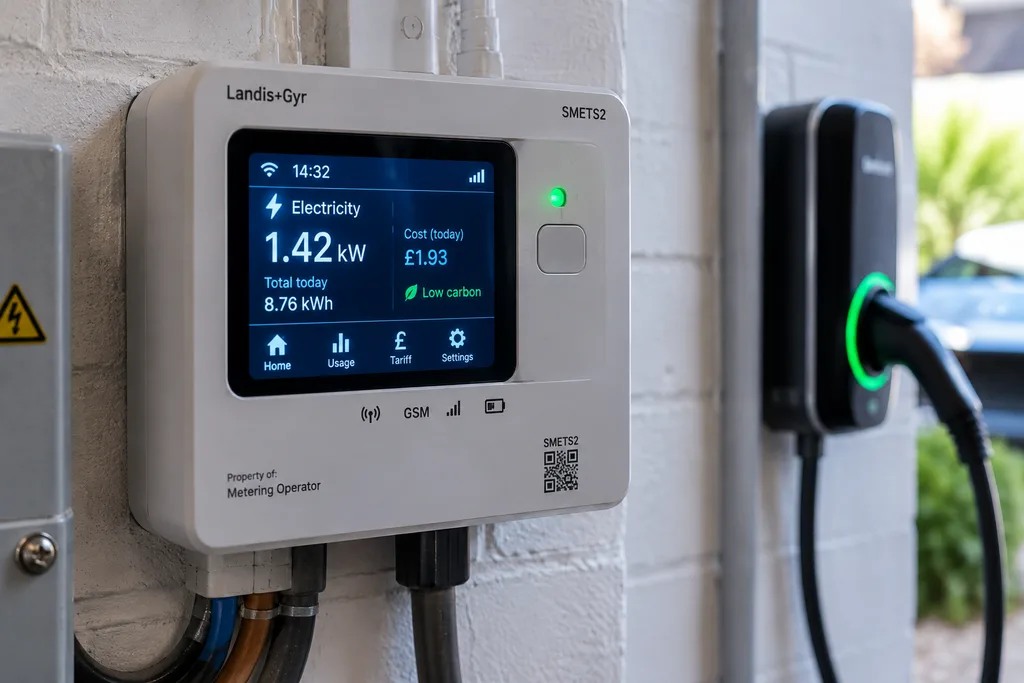
To access these tariffs, energy suppliers require you to have a second-generation smart meter (SMETS2) installed. This allows the supplier to take accurate half-hourly readings to bill your off-peak usage correctly.
The EV tariff market generally splits into two categories:
- Fixed-Window Tariffs: Plans like EDF GoElectric or British Gas EV Power work with any vehicle and any wallbox. You simply set your car’s timer to charge within the cheap overnight window (e.g., 11:00 pm to 6:00 am).
- Intelligent Charging Tariffs: Options like Intelligent Octopus Go require a compatible smart charger or a direct vehicle API integration. The supplier’s system dynamically schedules your car to charge when wholesale electricity is cheapest, often granting you additional cheap hours during the day.
Economy 7 vs Smart EV Tariffs: The Real Cost Comparison
This is where the forensic data makes all the difference. As of late 2026, the average electricity rate under the Ofgem Price Cap is roughly 26p to 28p per kWh. In stark contrast, the best dedicated EV tariffs charge anywhere between 6.5p and 9.5p per kWh during the night.
If you are currently hunting for the cheapest UK EV tariff, providers like Octopus Energy and OVO often provide nighttime rates that make driving incredibly affordable. Fully charging a standard 60kWh battery on a dedicated smart tariff will cost you around £4.50. Doing the exact same charge on a standard daytime rate would cost over £16.00. This brings the running cost of an EV down to roughly 2.3p per mile, compared to the 13.5p per mile you would pay to fuel a petrol car.
The Peak Rate Penalty
However, the battle of Economy 7 vs Smart EV Tariffs is not decided solely at night. The critical factor that many guides gloss over is the daytime penalty. If your chosen tariff charges more than the official Ofgem cap during the day, you are paying a heavy penalty on all your standard household electricity (cooking, washing, watching television).
An average UK household consumes around 2,500 kWh of electricity per year, excluding the car. If your Economy 7 daytime rate is excessively high (e.g., 34p per kWh), you will wipe out all the savings you made by charging the car at night. Modern smart EV tariffs tend to have daytime rates that sit much closer to the standard price cap, protecting your wider household bills.
If you are planning to take advantage of these cheap overnight rates but rely on on-street parking, you must ensure your setup is legally compliant. Always use the best EV cable protectors for pavement charging to avoid liability under the Highways Act. Furthermore, if you are installing a new smart charger, ensure you know the rules regarding does an EV charger need an earth rod to keep your installation safe and tidy.
Frequently Asked Questions (FAQs)
Can an EV tariff reduce my whole house electricity bill? Yes, it absolutely can. Most EV tariffs apply their off-peak rate to the entire house, not just the car charger. If you run high-draw appliances like your washing machine or dishwasher during the cheap overnight window, you will save a substantial amount of money. This drastically improves the overall Economy 7 vs EV tariff comparison in favour of the smart tariff.
Do I also need to switch my gas supply to these tariffs? No. Economy 7 and EV tariffs are electricity-only products. You will remain on a standard tariff for your gas supply. If you are lucky enough to have solar panels on your roof, you might not even need to rely on the grid as much; simply pair your setup with one of the best EV chargers for solar panels to charge your car using free, excess daylight energy.
Conclusion
The final verdict is incredibly clear. When evaluating Economy 7 vs Smart EV Tariffs, modern smart plans completely obliterate the outdated two-rate system. While Economy 7 was a fantastic tool for night storage heaters in the past, its punishing daytime rates and rigid, non-adjusting timeframes make it a poor choice for modern homes.
By switching to a dedicated EV tariff with a SMETS2 smart meter, you not only slash your driving costs to around 2p per mile, but you also gain absolute control over your energy usage via smartphone apps, entirely bypassing extreme daytime penalties. For any electric vehicle owner in the UK, contacting your supplier to make the switch is the single most profitable upgrade you can make this year.