
Key Takeaways:
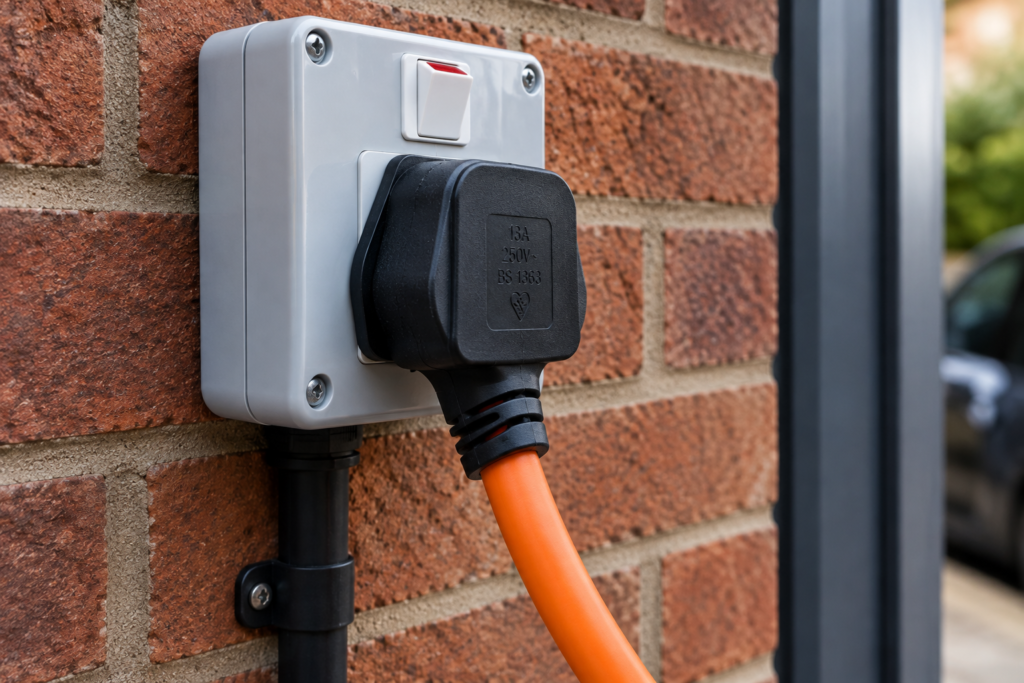
- You can legally charge an electric car from a 3-pin plug using a standard UK socket, but it should only be used as a temporary or emergency backup.
- Standard UK domestic sockets are not designed to handle maximum continuous electrical loads for 10 to 14 hours, which creates a significant overheating and fire hazard.
- Using a dedicated wallbox is exponentially safer, charges your vehicle three times faster, and allows you to access much cheaper overnight energy tariffs.
When transitioning to zero-emission driving, the upfront cost of installing a dedicated home wallbox can feel daunting. As a result, the very first question many new UK drivers ask is: can I simply charge an electric car from a 3-pin plug safely at home?
The short answer is yes, but it comes with massive caveats. Every new EV can theoretically be plugged into a standard domestic socket using a portable cable known as a “granny charger”. However, just because you can do it does not mean you should do it every day. In this comprehensive safety guide, we will explore the extreme risks of relying on domestic sockets and outline the golden rules you must follow to protect your home from electrical fires in 2026.
The Risks When You Charge an Electric Car From a 3-Pin Plug
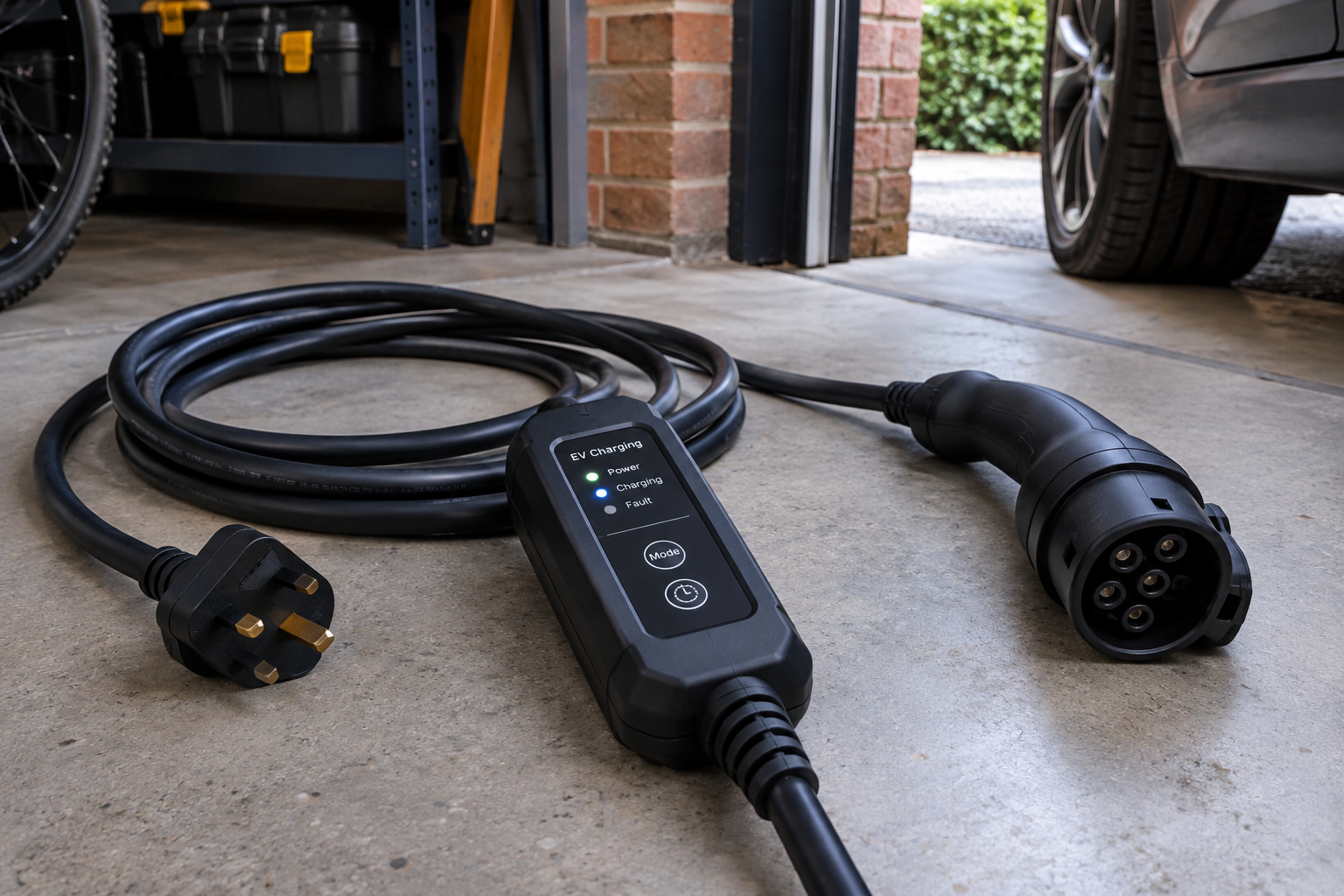
To understand the danger, you need to understand how British domestic sockets (BS 1363) work. A standard 3-pin plug can deliver a maximum of 13 amps. When you boil a kettle, it pulls 13 amps for about two minutes.
However, an electric vehicle will try to pull that maximum continuous load for anywhere between 10 and 18 hours. Standard domestic wiring is simply not engineered to sustain maximum capacity for that long without degrading.
According to Electrical Safety First, a leading UK consumer protection charity, pulling a continuous load through a standard domestic socket for hours on end drastically increases the risk of the plastic socket melting, causing severe electrical fires.
The Problem with “Granny Chargers”
Portable charging cables are affectionately called “granny chargers” because they are notoriously slow—ideal for when you are visiting your grandmother for the weekend. They typically cap the charging speed at around 2.3kW to prevent the fuse from blowing immediately.
Even at this restricted speed, a granny charger will take up to 24 hours to fully replenish a modern EV battery. This sluggish pace means your domestic wiring is placed under constant, unrelenting thermal stress.
4 Golden Rules for 3-Pin EV Charging Cable Safety
If you find yourself in an emergency and absolutely must charge an electric car from a 3-pin plug, you must strictly adhere to the following safety protocols.
1. Never Use a Standard Extension Lead This is the most critical rule. Standard indoor extension leads will rapidly overheat and catch fire if used for EV charging. If the socket is too far away, you must either move the car or purchase a specialized, EV-rated heavy-duty extension cable that features a built-in thermal cut-out.
2. Check the Socket Health Before plugging in your 3-pin EV charging cable, inspect the wall socket. If the plastic looks yellowed, feels warm to the touch, or has any scorch marks, do not use it under any circumstances.
3. Plug Directly into the Mains Ensure the socket you are using is on a dedicated circuit if possible. Plugging your car into the same ring main as your oven or washing machine will inevitably trip your home’s fuse box.
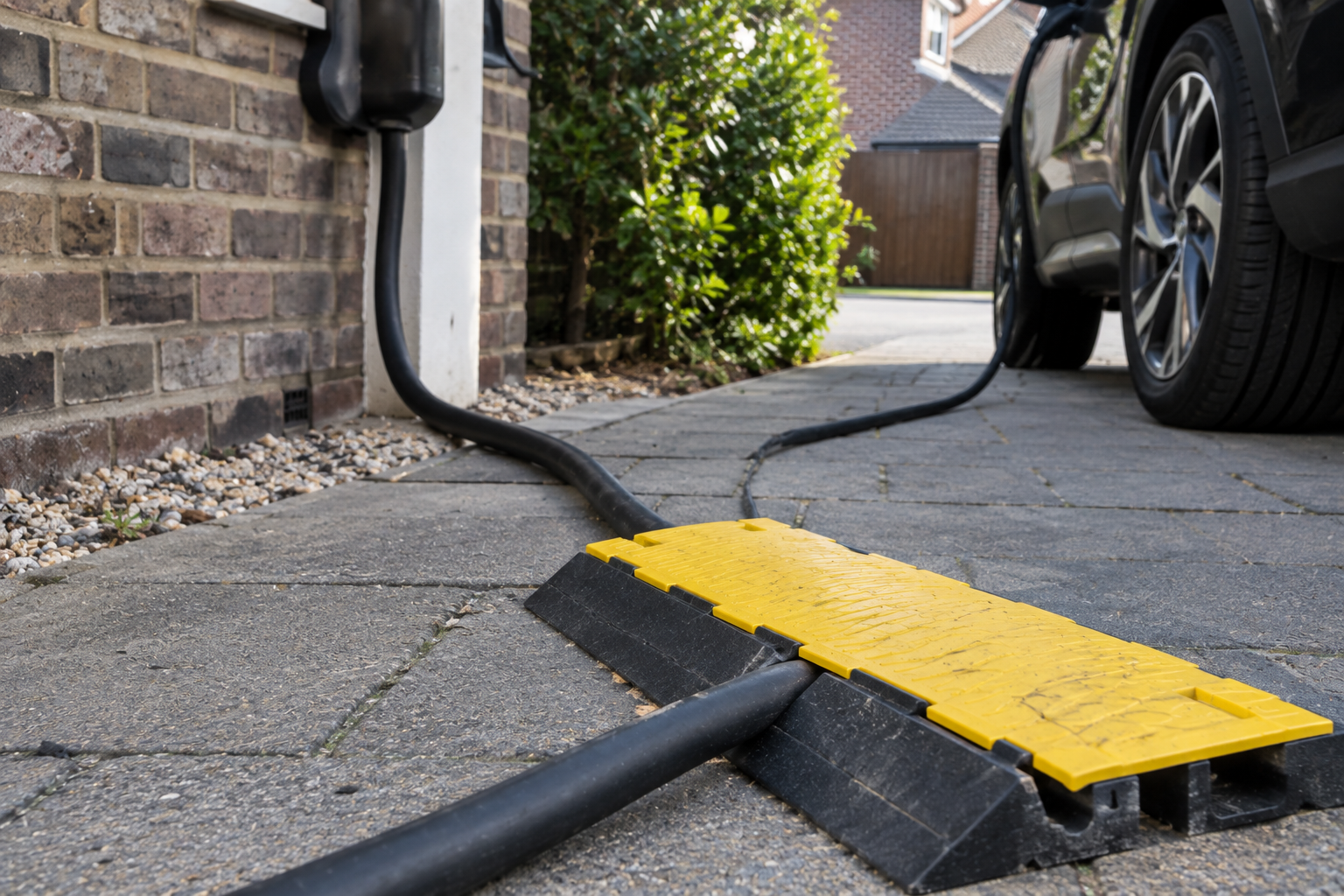
4. Be Mindful of Trailing Cables If you are passing the granny charger cable out of a window and across the public pavement, you are legally liable for any pedestrians who trip over it. You must always use highly visible EV cable protectors to comply with the Highways Act 1980.
Why a Dedicated Wallbox is the Ultimate Solution
Relying on a 3-pin socket is a false economy. While you save money on the initial installation, you expose your home to massive fire risks and miss out on long-term savings.
A modern 7kW wallbox is specifically engineered for continuous, high-capacity loads. Not only is it exponentially safer, but it also charges your car three times faster. Furthermore, modern chargers feature built-in PEN fault protection, meaning you do not even need an ugly earth rod installed in your garden.
Most importantly, using a smart wallbox allows you to access a dedicated smart EV tariff. Granny chargers cannot schedule charging sessions to align with off-peak overnight rates, meaning 3-pin charging will cost you significantly more on your monthly energy bills.
Frequently Asked Questions (FAQs)
Is it illegal to charge my EV with an extension lead?
It is not explicitly illegal, but it is highly dangerous and strongly condemned by UK fire services. If an electrical fire occurs because you used a non-EV-rated extension lead, your home insurance policy will likely be invalidated.
How fast does a 3-pin plug charge an electric car?
A standard UK 3-pin socket will deliver around 2.3kW of power. This adds approximately 6 to 8 miles of range per hour. Fully charging a standard 60kWh battery will take well over 24 hours.
The Bottom Line
Ultimately, while you technically can charge an electric car from a 3-pin plug, it should strictly remain an emergency backup plan or a temporary solution when visiting friends. Standard UK domestic sockets are not designed to endure the extreme, continuous thermal load that an EV demands. To protect your home, slash your charging times, and unlock the cheapest energy tariffs, investing in a professionally installed 7kW wallbox is absolutely essential for any British EV owner.