
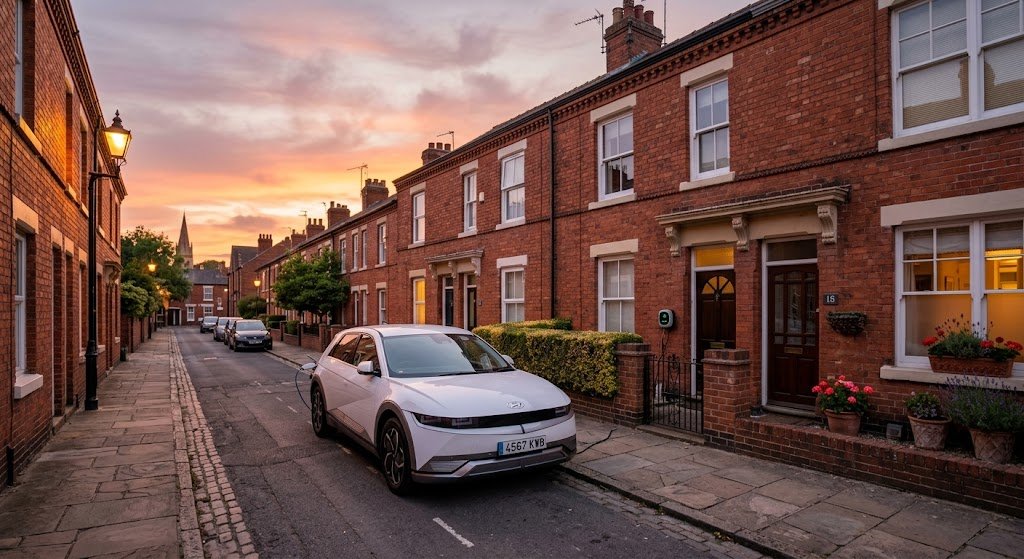
For millions of British drivers, transitioning to an electric vehicle comes with one major hurdle: a lack of off-street parking. With over 30% of UK households living in terraced properties or flats without a private driveway, figuring out the exact legalities of charging an EV on the street UK residents face is a daily challenge.
If you park on the public road directly in front of your house, can you simply run a cable from your living room window to your car? The answer involves local council regulations, the Highways Act 1980, and emerging smart charging solutions. Here is exactly what you need to know to stay completely compliant and avoid massive liability fines in 2026.
The Legal Rules for Charging an EV on the Street UK
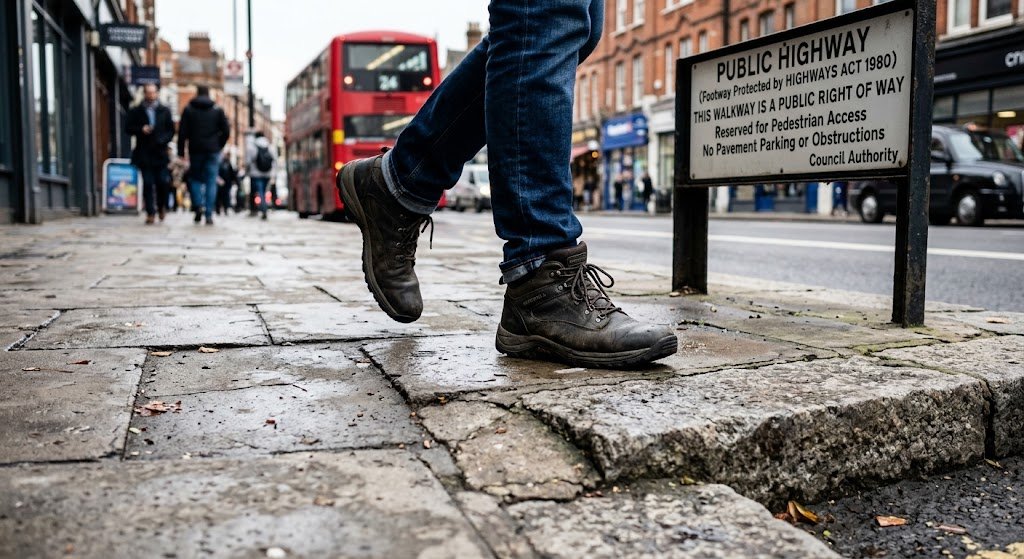
Technically, trailing a wire across a public footway is not illegal at a national level, but it is heavily restricted by the Highways Act 1980. Under this specific law, it is an offense to place any wire or apparatus across a highway (which legally includes the pavement) in a way that poses a danger or nuisance to the general public.
If a pedestrian trips over your charging cable and injures themselves, you—not the local council—are legally and financially liable for their injuries. Because of this extreme safety risk, almost all local authorities require you to follow strict protocols if you intend to charge your vehicle from your domestic energy supply.
Furthermore, standard car insurance policies generally do not cover public liability claims arising from trailing cables. Therefore, keeping the pavement clear is not just a legal requirement, but a massive financial necessity.
3 Approved Methods for On-Street EV Charging
If you live in a terraced house, you generally have three legal pathways to charge your car safely right outside your front door.
1. Using a Heavy-Duty EV Cable Protector
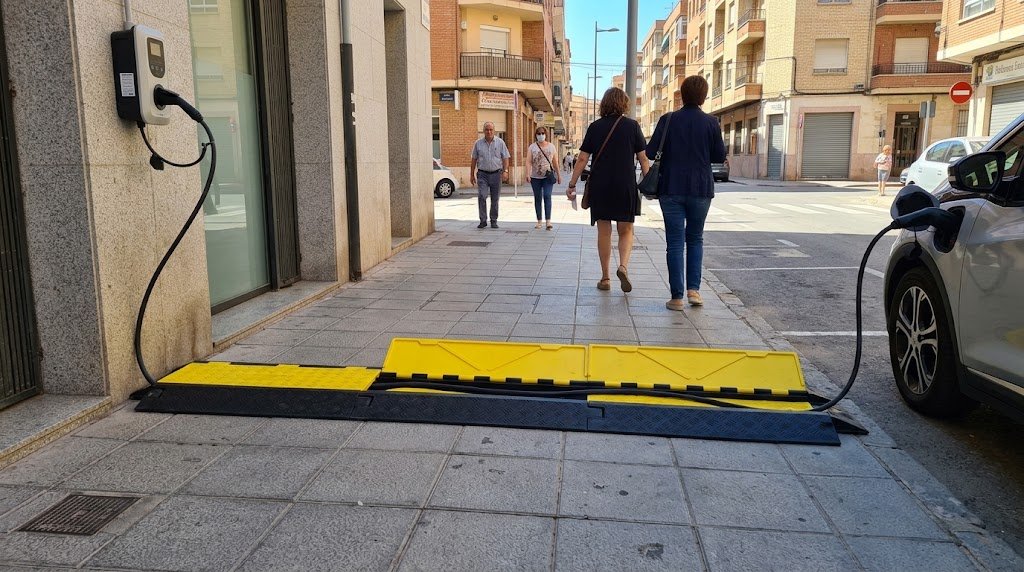
Many local councils allow you to run a standard Type 2 cable across the pavement, provided it is securely covered by a high-visibility, anti-trip cable protector.
- The protector must lie completely flat against the concrete, usually featuring highly visible yellow hazard stripes.
- The cable should only be deployed while the car is actively charging. It must be immediately removed once the session is finished.
- Note: Always check your specific local council’s website first, as some strict boroughs have outright banned trailing cables, even when using rubber mats.
2. Cross-Pavement Charging Channels (The Permanent Fix)
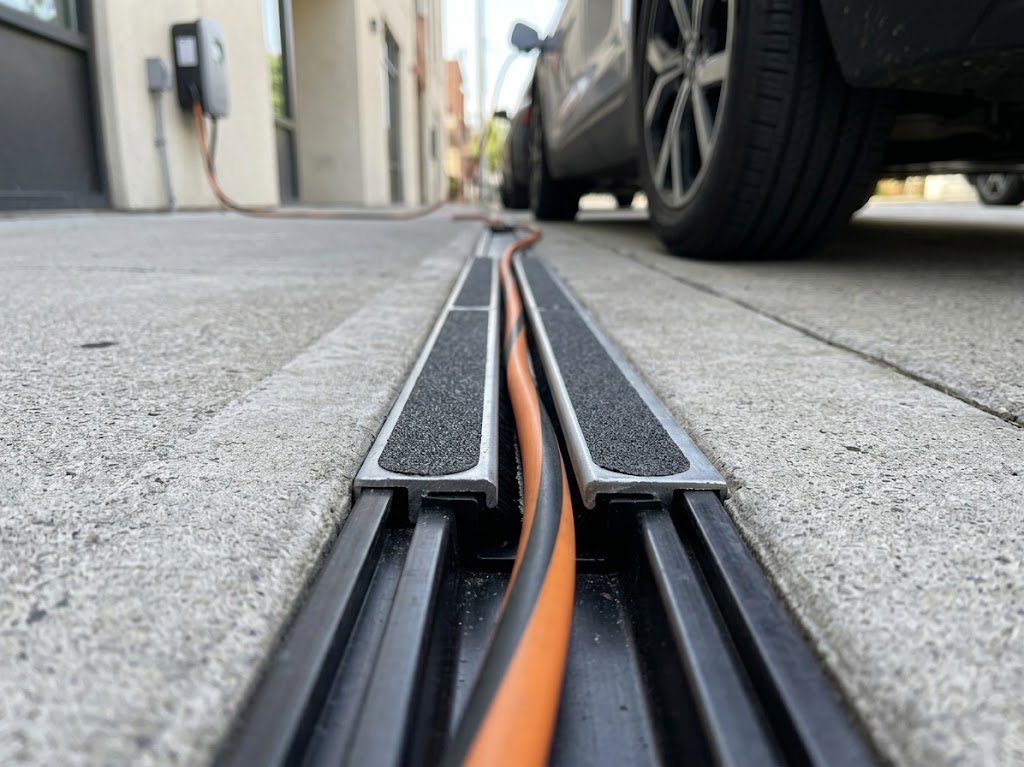
The most elegant and safest solution in 2026 is installing a dedicated cross-pavement channel, such as Kerbo Charge or Gul-e. These are shallow metal or polymer gullies permanently installed directly into the pavement.
- You simply press your charging cable into the channel, and a flexible lid snaps shut over it, sitting perfectly flush with the pavement surface.
- This removes all trip hazards completely and protects the cable from weather damage.
- Crucial step: You cannot install this yourself. You must apply for permission through your local highway authority, and the installation must be carried out by council-approved contractors.
3. Public Lamp Post Chargers
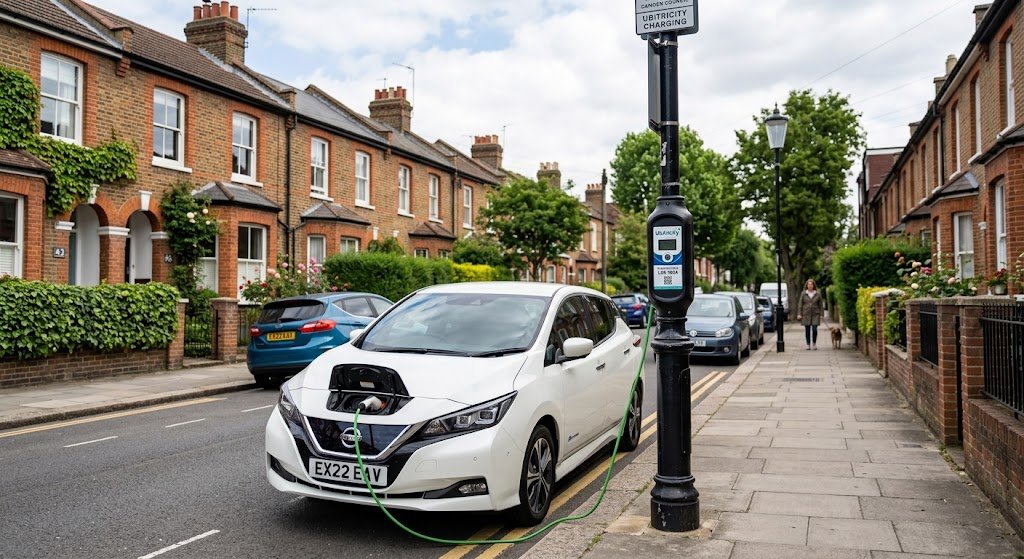
If your council completely forbids both trailing cables and pavement channels, your best option is relying on the public network. Companies like Ubitricity have retrofitted thousands of standard streetlights across the UK with 5kW charging sockets. While the electricity rate will be slightly higher than a dedicated smart EV tariff, it requires zero installation on your part and completely bypasses the legal headache of pavement cables.
Do You Qualify for the OZEV Cross-Pavement Grant?
There is excellent news for terraced house owners this year. The UK government has expanded its OZEV EV chargepoint grant to specifically support drivers who rely exclusively on on-street parking.
If your local council approves the installation of a cross-pavement charging channel, you can claim a government grant covering 75% of the cost of buying and installing the home wallbox. This allows you to claim up to a maximum of £350 for the charger itself, plus an additional £500 toward the physical pavement infrastructure.
Frequently Asked Questions (FAQs)
Can I run an EV charging cable from an upstairs window?
No. Dangling a cable from an upstairs window or hanging it over trees to cross the pavement is highly dangerous, illegal under the Highways Act, and explicitly banned by all UK councils.
Does my local council offer EV charging grants?
Aside from the national OZEV grant, many local authorities operate their own schemes to subsidize cross-pavement channels. You should contact your borough’s transport department to check for localized funding.
The Bottom Line
Solving the puzzle of charging an EV on the street UK rules require is entirely possible with the correct approach. Never run an exposed cable across a public walkway. At the very least, invest in a council-approved cable protector. For the ultimate peace of mind and maximum safety, contact your local authority today to apply for a permanent cross-pavement channel and take full advantage of the current OZEV grants.